Fastener drive types explained (Pozi, Phillips, Torx, Hex)
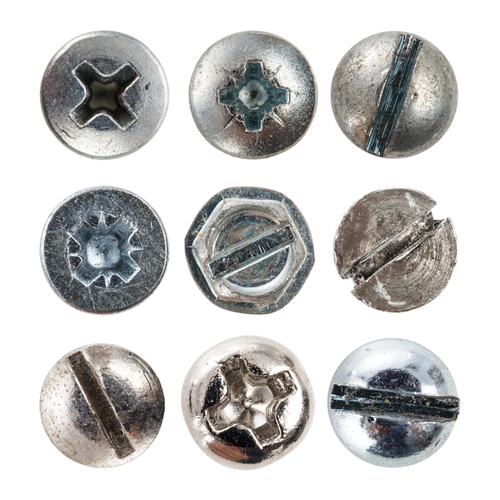
If you’ve ever stood there with a drill in one hand and a handful of screws in the other, wondering why none of your bits seems to fit properly, you’re not alone.
There are plenty of different head types out there, some of which look similar but serve different purposes.
Remembering and understanding each one can get a bit difficult, especially if you’re not a professional and you don’t come across them every day. Choose the wrong drive type, and you could end up with a head that starts chewing up hours and getting nowhere.
That’s exactly what this guide is for. At Efixings, we know everything there is to know about drive types, and we’re here to help you achieve fewer stripped heads and less bit wear.
A quick overview
Pozi screws are everywhere in the UK, most commonly as general timber fixings, while Phillips still pops up in plenty of pack hardware and lighter-duty jobs.
Torx is a favourite for higher-torque work like decking and fencing, and Hex (Allen) is common in furniture, machinery and assemblies where access is tighter, and screws are harder to install.
We’ll break down how to spot each one in seconds and which bit sizes you actually need day to day.
What is the drive on a screw?
A drive type is simply the shape built into the head of a screw (or bolt) that allows a tool, like a screwdriver or drill, to get a good grip on it.
It takes the turning force from a tool and transfers it into the screw so it can bite, pull materials together, and tighten properly. Some are made for higher torque, some are easier to turn, and some are more likely to slip if you push them too hard or use the wrong bit.
Choose a drive type and a bit that doesn’t match, and you’ll deform the recess quickly, leading to stripped heads that will need to be removed.
A drive type isn’t the same as a head type
This catches a lot of people out, so here’s an easy way to remember the difference:
- Drive type = the recess your tool fits into (Pozi, Phillips, Torx, Hex)
- Head type = the outside shape of the screw head (countersunk, pan head, button head, hex head, etc.)
Drive types compared
Before we dive a bit deeper into each one, here is a quick comparison guide to help you choose the drive type you should use.
|
Drive type
|
Best for
|
Main benefit
|
Main drawback
|
|
Philips
|
Light duty work, such as small fittings or electrics
|
They’re easy to find
|
More likely to slip under higher torque
|
|
Pozi
|
Wood screws, general fixings
|
Provides a better grip than Phillips
|
The wrong bit choice damages heads
|
|
Torx
|
Decking, landscaping, structural timber, automotive
|
Handles higher torque better with less slip
|
Needs Torx bits
|
|
Hex (allen)
|
Furniture, machinery, bikes, tight installations
|
Provides strong engagement
|
A socket can easily clog with debris
|
Pozi (Pozidriv) explained
If you do any kind of general fixing or joinery around the house, including kitchen fitting or studwork, then you most likely use a pozi drive without thinking about it.
That’s because it’s one of the most common drive types you’ll come across, as it's designed for a lot of general-purpose fixings, including wood screws. Pozi drivers give you a better bite than a standard Phillips driver.
You can drive screws in with more control and fewer slips, especially when you’re working quickly or putting a bit of pressure through a drill.
What does it look like?
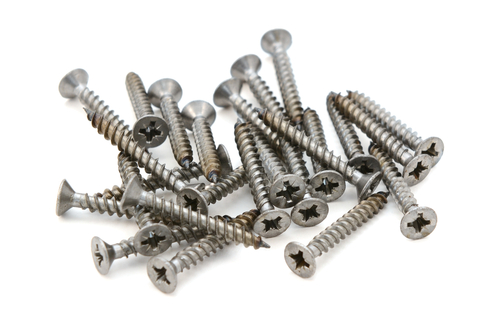
Pozidriv is a cross-head drive that looks a lot like Phillips at first glance, but it’s not the same.
The easiest way to spot it is the extra set of faint lines between the main cross slots, which makes it look like there are two crosses overlaid.
What can they be used for?
- General wood-to-wood fixings
- MDF and chipboard
- Battening and light framing
- Studwork
- Kitchen and bedroom fitting
- Interior projects where you’re driving a lot of screws quickly
Phillips explained
Philips drives have been around for years, so it’s one of the drives most people recognise. You’ll still see it on plenty of fixings, especially in packaged hardware, electrical bits, and lighter-duty jobs.
However, they tend to deal with a few issues, like cam-out and tearing up the moment it gets tight. While they aren’t bad drives to work with, they can be a bit fickle, so you need to be careful to not push them too hard or use them for the wrong type of installation.
A Phillips bit will technically fit in a Pozi screw and vice versa, but it’s a poor match. You’ll only end up with damaged screws and more work for yourself.
What does it look like?
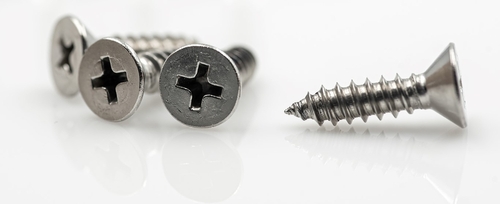
A Phillips drive is a simple cross-shaped recess (often labelled PH).
Unlike Pozi, it doesn’t have the extra tick marks between the main cross slots, so it looks cleaner and more basic.
What can they be used for?
- Light interior tasks like hooks, brackets, and small fixings
- General household maintenance
- Thin sheet materials and light gauge metal fixings
- Fitting electrical accessories
Torx explained
A torx drive is really easy to use, especially for exterior work, timber fixing, or anything where you’re driving screws all day with an impact driver.
This six-point star-shaped drive is found on many modern landscaping screws, decking screws, and heavy-duty fixings. Many people actually use them as a replacement for cross-head screws, as they provide less slipping and chewing up.
They can withstand high torque and offer some basic tamper resistance.
What does it look like?
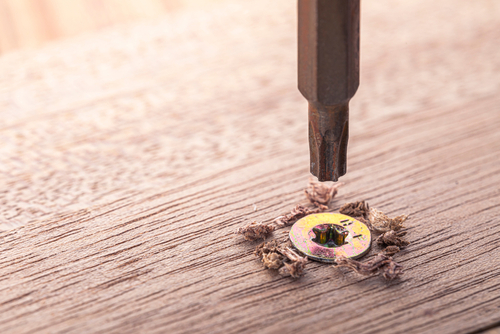
A Torx drive is a star-shaped recess with six rounded points. Bits are labelled T followed by a number, like T15, T20, T25, T30.
The shape provides a strong, consistent contact area between the bit and the screw head. That’s why it offers such a good grip, especially when the screw starts to bite and resistance increases.
What can they be used for?
- Fencing
- Sleepers and landscaping timbers
- Sheet materials and timber builds
- Decking
- Outdoor structures (pergolas, raised beds, garden rooms)
- Repeated fixing with an impact drives
Hex (Allen) explained
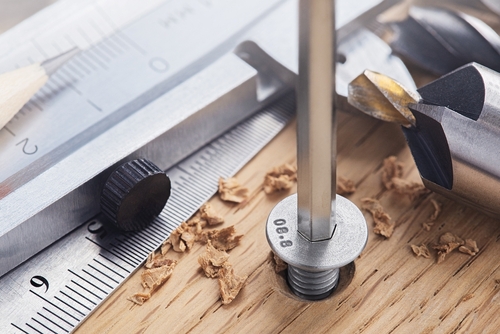
A hex socket drive, also known as an Allen drive, is the drive type with a six-sided socket in the head of the screw or bolt.
Instead of a cross or star shape, you’ve got a clean hexagonal recess that takes an Allen key or hex bit. These are mostly found on bike parts, machine guards, brackets, flat-pack furniture, and tool fixings.
It provides a secure, neat fit and can be removed without destroying the head. They also provide excellent torque and strong engagement when the bit is seated fully.
What does it look like?
These have an internal six-sided recess, creating a hexagonal shape. It also has a smaller head profile, so it can be used for tighter spaces.
You’ll usually see hex sizes listed in millimetres in the UK (e.g., 2.5mm, 3mm, 4mm, 5mm, 6mm).
What can they be used for?
- Bikes and scooters (stems, clamps, bottle cages, accessories)
- Machinery and equipment (guards, mounts, covers)
- Recessed head fixings (socket head screws)
- Metal-to-metal assemblies, especially with machine screws
- Furniture assembly (bed frames, cabinets, brackets)
Top up on quality screws for your next project
When you’re halfway through a job, the last thing you want is to run out of screws or to realise you’ve been using the wrong drive type the whole time.
At Efixings, you can stock up on screws and fixings in different drive types, so you have what you need when you need it. All of our screws offer excellent durability and ease of installation, perfect for any job, professional or DIY.
Browse our screws and fixings today to top up your toolbox without spending a fortune.